7 Ways to Protect Your Commercial Yard fromTheft in 2027
Practical steps to help protect trucks, trailers, equipment and materials at commercial yards across the
GTA.
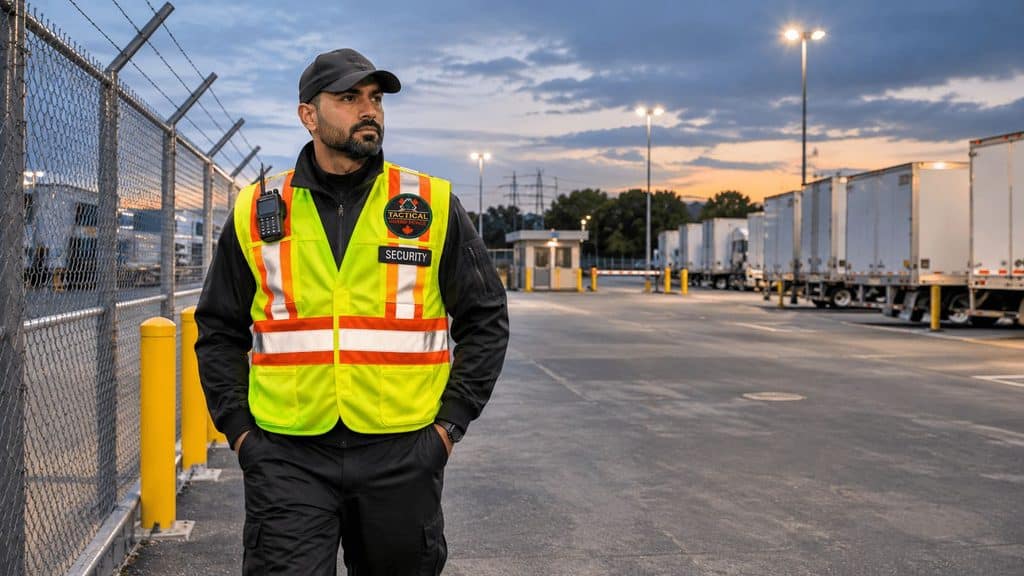
A commercial yard can hold a lot of value in one open space. Trucks, trailers, equipment, fuel, scrap metal, building materials and customer goods may all sit outside overnight, often with nobody nearby.
That can make a yard an attractive target for thieves. Unlike a warehouse, a yard usually has no walls or roof. A fence may be the main barrier between valuable property and the road.
The cost of a theft can go beyond the missing item. You may also face downtime, missed deliveries, insurance claims and difficult conversations with customers.
The good news is that better yard security does not always start with a large budget. Whether you manage a trucking yard, a contractor’s yard or an outdoor storage lot in the GTA, a few practical steps can help reduce risk.
Tactical Guard Force Security provides security services for commercial and industrial properties across Toronto and The Greater Toronto Area. Options can include on-site security guards, mobile patrols, CCTV monitoring and gatehouse security. The right approach depends on your property, operating hours and security needs.
1. Walk Your Yard Like a Thief Would
Before buying new equipment, find out where your yard is most exposed. Walk the property after dark, when lighting, visibility and access points may look different from how they do during the day.
Start outside the fence and ask yourself:
- Can people see valuable goods from the road?
- Are there dark corners, damaged sections or gaps in the fence?
- Do trees, bins or parked trailers create hiding places or an easy way over the fence?
- Could a vehicle approach the gate without being noticed?
Write down what you find and deal with the biggest risks first. Repeat the check every few months, because the layout can change as stock, vehicles and equipment move around.
2. Strengthen Your Perimeter
Your fence is one of the first barriers a trespasser has to get past, so keep it in good condition. Check regularly for cut links, loose posts, damaged gates and gaps near the ground.
A strong perimeter is not only about fence height. Pay attention to corners, the bottom edge and places where stacked materials could make climbing easier. Keep equipment and materials away from the fence line where possible.
Do not overlook the back of the property. Sections facing a rail line, ditch or empty lot may be less visible to staff and neighbours. Include these areas in your inspections.
3. Control Your Gates and Access
A yard can have a strong fence but still be vulnerable if the gate is left open or access is poorly managed. Use suitable locks and keep keys or access codes limited to people who need them. When an employee leaves or access permissions change, collect keys and update codes promptly.
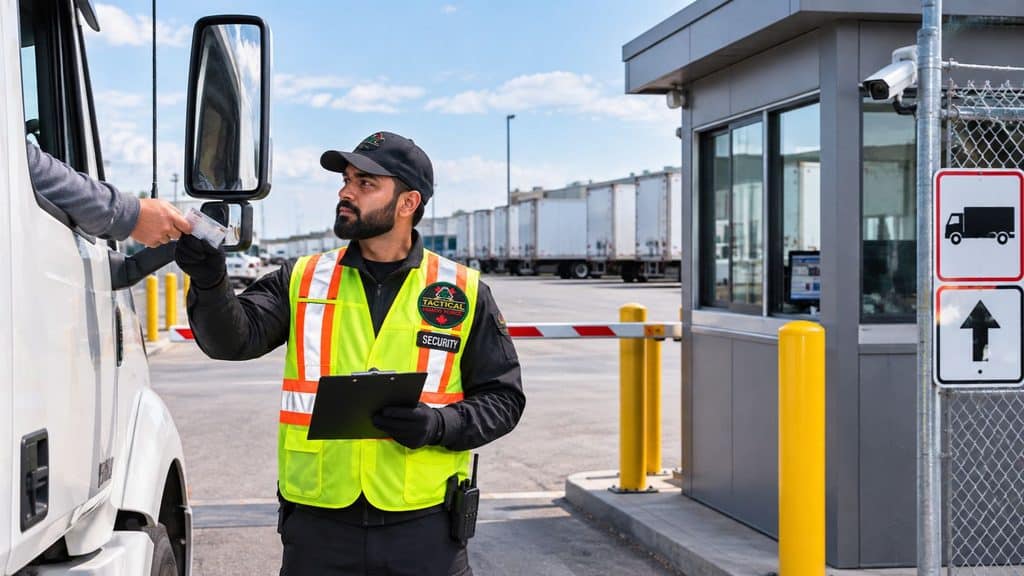
Know who is entering your yard during business hours, too. Theft does not only happen at night. On a busy day, an unfamiliar visitor or vehicle can blend in with regular activity.
A simple sign-in process can help. Record drivers, contractors and visitors, and check delivery or collection paperwork before goods leave the property. For a busy site, a gatehouse or designated access-control post may help manage arrivals and departures.
4. Light the Right Areas and Keep Sightlines Clear
Good lighting can make it harder for someone to move around unseen, but it needs to cover the right places. Focus on entrances, fence lines, fuel storage and areas where high-value equipment is parked.
The yard layout matters just as much. Tall stacks of pallets or rows of trailers can create blind spots for staff and cameras. Where practical, keep valuable items in visible areas that can be checked from the office or monitored by cameras.
Check the lights after dark from time to time. A failed fixture can be easy to miss during daytime inspections.
5. Use Cameras That Someone Actually Monitors
Cameras can help record activity and provide information after an incident. Live monitoring may also help someone notice unusual activity while it is happening, provided there is a clear process for responding.
When planning a camera system, think about what the footage needs to show. Can you read a licence plate at the gate? Can you identify a vehicle at night or during snowfall? Do cameras cover the back fence as well as the front office?
Test the system in different weather and lighting conditions. Snow, ice, rain and early winter sunsets can affect visibility.
Remember privacy as well as security. Before installing cameras, identify a legitimate business purpose, limit the camera view to what is needed, post clear notice where required, restrict who can view recordings and keep footage only as long as necessary. Avoid recording areas where people reasonably expect privacy. The exact legal requirements depend on the business, the people being recorded and the applicable federal or provincial privacy rules.
6. Make Vehicles and Equipment Harder to Move
Trailers and other movable equipment can be attractive targets. Truck News reported that Équité Association
estimated approximately 970 trailer thefts across Canada in 2025, compared with about 570 in 2024. The report noted that the 2025 figures were still being validated when the article was published on February 23, 2026. Treat these as reported estimates, not final audited totals.
A few basic habits can make equipment harder to take:
- Use suitable kingpin locks on parked trailers.
- Keep vehicle and equipment keys in a secure place, not inside unattended cabs.
- Where practical and safe, position trailers so access to doors or coupling points is restricted.
- Consider GPS tracking for high-value units.
- Record serial numbers, registration details and clear photos of equipment.
Keep the records somewhere secure and make sure the right people can access them if an item goes missing. They may help when reporting a theft to police or speaking with your insurer.
7. Add Security Guards or Mobile Patrols
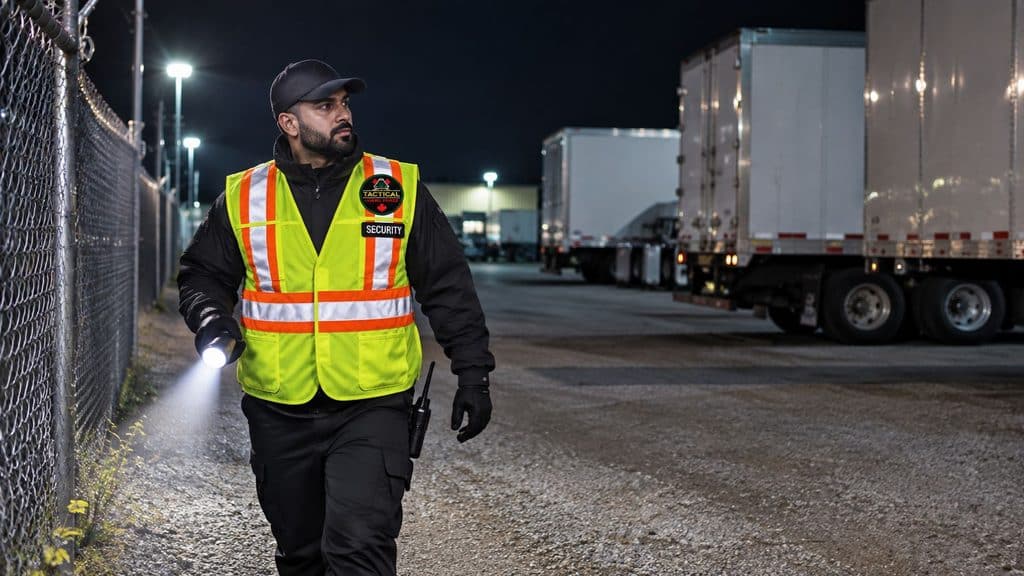
Locks, lighting and cameras are useful, but they still need to be checked and maintained. Depending on the agreed duties, a security guard can patrol the property, check gates, notice damage to fencing, monitor unfamiliar activity and report concerns to the site contact.
The right level of coverage depends on the yard. A smaller lot may benefit from scheduled or randomized mobile patrol visits. A larger yard with high-value vehicles or equipment may need a guard on site during evenings, weekends or other higher-risk periods.
If guards are expected to manage access or respond to incidents, agree on their duties in advance. Clear post orders should explain what to check, who to contact, how to record incidents and when emergency services should be called.
Ontario’s Trespass to Property Act sets out when entry may be prohibited and how notice can be given, including by signs displayed clearly at ordinary access points. The Act also addresses a direction to leave by an occupier or a person authorized by the occupier. Make sure any guard assigned to give such directions has clear authorization and follows the site’s procedures. This is general information, not legal advice.
Build a Yard Security Plan for 2027
No single measure can prevent every theft. A stronger plan combines several layers: a maintained perimeter, controlled access, good lighting, useful camera coverage, secure equipment and people who know how to respond.
Start with a walk-through, fix the problems you can address quickly and decide where additional support would make a difference.
Tactical Guard Force Security provides security options for commercial and industrial properties across Toronto and the GTA, including security guards, mobile patrols, CCTV monitoring and gatehouse security. If you are reviewing security for a yard, talk with our team about your property, operating hours and the coverage you may need.
Ready to discuss your yard security? Contact Tactical Guard Force Security to talk through your requirements.